Execution Intelligence for SaaS: The New Operating System for Predictable Delivery

23 Feb 2026

Software Development

Two business professionals sitting at a desk in a modern office, looking at a tablet together while discussing notes, with a notebook, pen, and smartphone on the table

Introduction

A lot of teams have the same problem right now: software development is faster, but harder to control.

AI tools improve local productivity, but delivery is a system. If your bottleneck is downstream (review, QA, approvals, platform constraints), increased coding speed can raise work-in-progress and make the system less stable.

This is consistent with how DORA describes modern delivery performance: improving one part of the process does not automatically improve overall software delivery outcomes. 

Execution intelligence is the operating model that closes that gap.

What execution intelligence means

Execution intelligence is an AI-assisted control layer for delivery that continuously:

  • models capacity (including interrupts)
  • maps dependencies across teams and systems
  • tracks approvals and gating steps
  • forecasts delivery risk early enough to change the plan

Traditional agile tends to answer: “What are we building?”
Execution intelligence also answers: “What is likely to stall, and what should we change now?”

This aligns with how Playbook positions itself for software teams: sprint management plus dependency tracking, QA workflows, real-time notifications, and cross-project analytics for predictability. 

The “before sprint one” foundations most SaaS teams skip

Execution failures are often baked in early. These are the five foundations that reduce schedule volatility and improve release predictability.

Define the execution model before the roadmap
Roadmaps are usually feature-first. Predictable execution requires explicit decisions about:

  • review SLAs
  • QA gating strategy
  • approval cadence
  • release cadence

Playbook highlights built-in approval workflows and change management as mechanisms to reduce bottlenecks and create accountability in execution. 

Separate planning layers (product vs sprint vs execution vs governance)
When these layers blend, you get mid-sprint scope churn and unclear ownership.

A useful separation:

  • Product layer: epics, themes, OKRs, release windows
  • Sprint layer: user stories, acceptance criteria, capacity allocation
  • Execution layer: PR workflow, review SLA, CI/CD timing
  • Governance layer: sign-offs, security, compliance

Playbook’s positioning across sprint management, QA workflows, approvals, and cross-project reporting supports this kind of layered visibility. 

Model dependencies explicitly (project scheduling, not just task tracking)
Dependency graphs are not optional in modern SaaS. They are the real schedule.

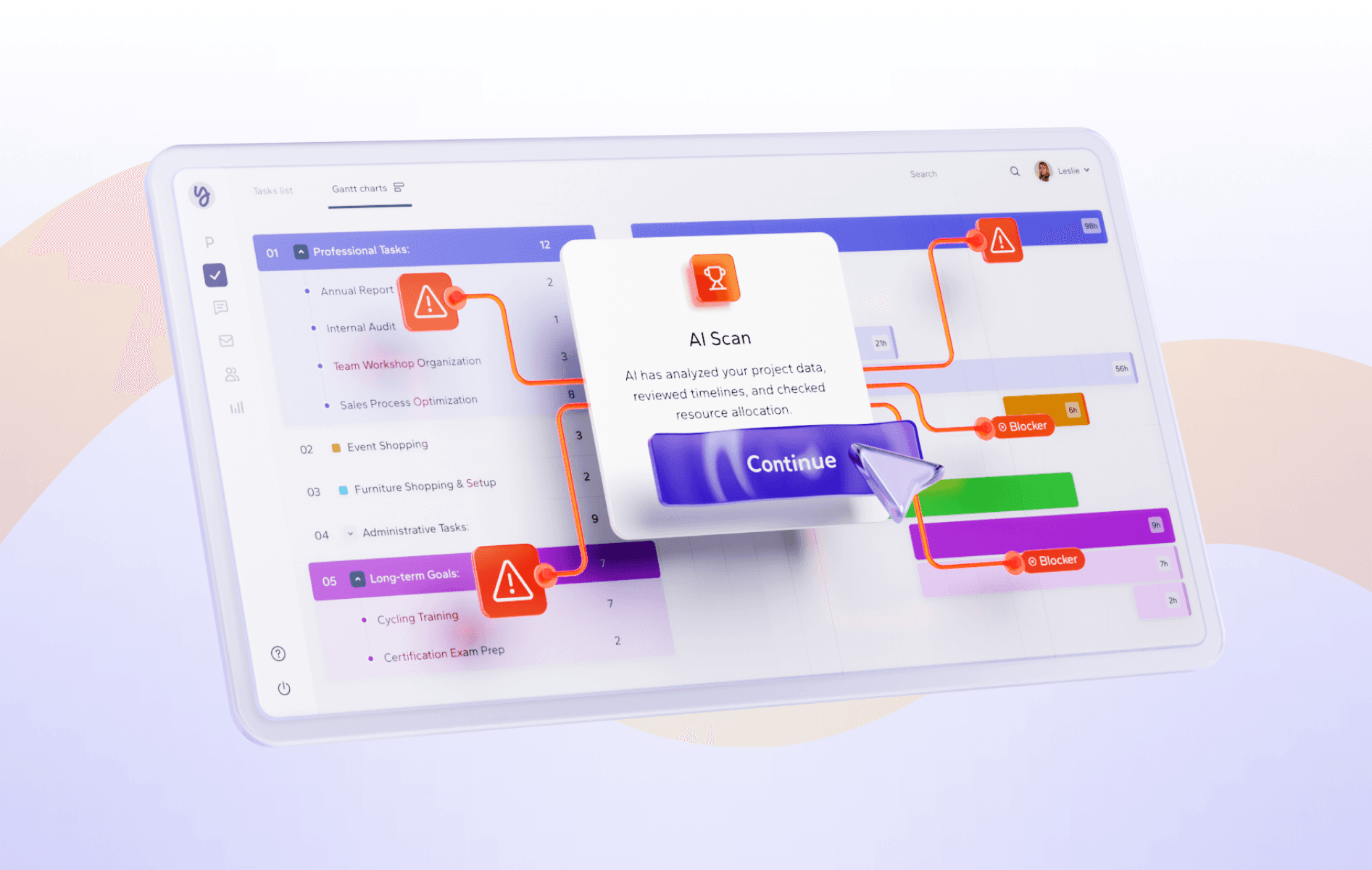
Playbook explicitly emphasizes multi-team dependency tracking for software teams to make blockers and handoffs visible. 

Treat QA as a scheduled resource (workload balancing that includes validation)
If QA is capacity-limited (it is), treating it as “after dev” guarantees late sprint pain.

Playbook’s integrated QA workflows help keep testing status visible in the same system as the timeline. 

Define acceptance criteria rigorously (reduce rework loops)
Vague acceptance criteria drive:

  • rework
  • late clarifications
  • delayed sign-off

Execution intelligence uses patterns of rework and spillover to surface “high-risk stories,” but only if you capture the signals.

The execution bottlenecks that drive delivery slips

If you want a practical definition of “execution intelligence,” it is this: make these bottlenecks measurable, visible, and fixable before they cause schedule drift.

Code review is the new inspection gate
Write speed can increase quickly. Review speed rarely does.

Execution intelligence treats review as a queue:

  • predicts congestion
  • routes reviewer attention
  • reduces “PR aging”

Playbook positions version control linkage and real-time notifications as core to keeping squads aligned through change and blockers. 

Sprint capacity is not static (resource allocation must include reality)
Capacity changes with:

  • incidents
  • support load
  • meetings
  • onboarding
  • architecture work

Execution intelligence updates capacity forecasts instead of clinging to story point averages.

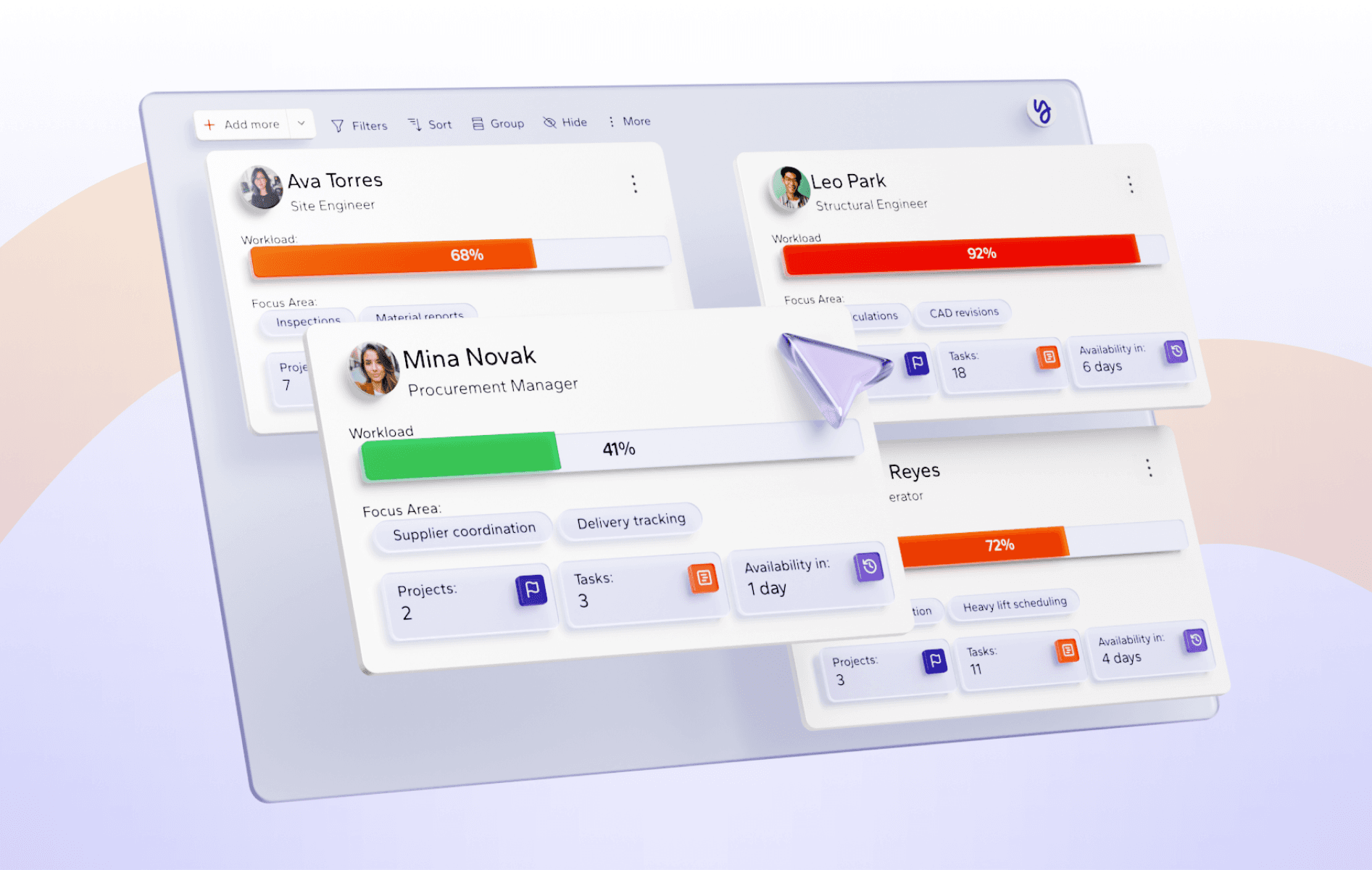
Playbook includes capacity and resource forecasting for software teams. 

Cross-team dependency clusters
Most “surprise” delays are dependency clusters discovered too late.

Execution intelligence maps them early and measures dependency density.

Playbook highlights multi-team dependencies and cross-project analytics for identifying bottlenecks and delivery risk. 

Release risk forecasting (risk-adjusted planning)
Release readiness depends on:

  • open bug trends
  • incomplete approvals
  • regression risk
  • feature-flag coordination

This is where probability beats optimism.

A useful external benchmark for what “good” looks like: DORA’s 2023 infographic reports that top performers deploy on demand, have lead time for changes under 1 day, and recover from failed deployments in under 1 hour, with a 5% change failure rate

You do not need to hit those numbers immediately, but they demonstrate what predictable delivery can look like when the whole execution system is managed.

Architecture drift (a hidden coordination tax)
AI-assisted development can accelerate refactors and service creation. Without guardrails, this increases integration complexity.

Execution intelligence flags drift signals such as:

  • unusually volatile dependencies around a service
  • repeated refactors that correlate with delivery delays

How to operationalize execution intelligence in Playbook

If you want this to feel real, not theoretical, anchor it to a weekly cadence.

Weekly cadence that works

  • Monday: risk scan (capacity + dependency + QA)
  • Mid-week: remove blockers and rebalance review/QA load
  • Friday: close open loops (approvals, test debt, release readiness)

Playbook’s autonomous agents are described as planning, predicting, approving, and communicating within workflows, with role-based access and workflow embedding. 

In practical terms, that maps well to delivery operations:

  • a risk agent detects slipping tasks, dependency clashes, and missing docs
  • a sequencing agent re-optimizes schedules as conditions change
  • an approvals agent routes and timestamps governance steps
  • a messenger agent escalates when work stalls

Those agent roles are directly described on Playbook’s AI agents page. 

Getting started without a big migration

  1. Start with one product area or one squad
  2. Integrate version control and CI/CD signals into the project timeline
  3. Make dependencies explicit and assign owners
  4. Formalize QA and approvals as scheduled work
  5. Use cross-project reporting to spot bottlenecks, not just count story points

Playbook’s software development page emphasizes integrations (GitHub, GitLab, Jira, Slack, CI/CD pipelines) and cross-project reporting to analyze bottlenecks and predict timelines. 

Playbook also offers a straightforward entry point: a 7-day free trial plus demo access, which supports a low-risk pilot. 

FAQ

How is execution intelligence different from agile tools?

Agile tools primarily track work and status. Execution intelligence continuously forecasts risk by modeling capacity, dependencies, QA, and approvals, then nudges the system toward predictable outcomes. 

Does execution intelligence replace agile?

No. It is a control layer over the agile system you already run, focused on bottlenecks and probability-based forecasting. 

What is the first bottleneck to fix?

For many SaaS teams, it is code review or QA gating, because those constraints do not scale automatically when coding gets faster.

Key takeaways

  • Faster coding does not guarantee faster delivery; delivery is constrained by the full execution system. 
  • Execution intelligence treats dependencies, QA, approvals, and capacity as schedulable constraints, not background noise. 
  • DORA’s benchmark bands show what predictable delivery can look like when throughput and stability are managed together. 
  • Playbook’s positioning (sprints, dependencies, QA, approvals, integrations, agents) matches the operational needs of execution intelligence. 
Keep reading