Construction Project Controls Software: What It Does and Where It Falls Short
Project controls is the discipline of measuring whether a project is going to hit its time and cost targets, and providing early enough warning to do something...


A punch list is the record of work that remains incomplete, defective or not built to specification at the point a project or a section approaches completion. In the UK and much of the Commonwealth the same document is called a snag list.
It is usually produced by the general contractor, architect or owner's representative walking the building near substantial completion, and each item is assigned to whichever subcontractor is responsible for putting it right.
The name comes from the older practice of punching a hole in a paper list beside each item as it was signed off. The method has moved on. The habit of treating the punch list as an administrative task at the end of the job has not, and that is where the trouble starts.
Closeout is where schedules fail quietly. The main structure is finished, the site looks complete, everyone assumes the project is effectively delivered, and then the last four weeks take nine.
Punch items behave differently from ordinary activities and that is why they are underestimated:
The commercial consequence lands on the contractor. Every week of overrun carries preliminaries, supervision and often liquidated damages, against a defect list that may represent a fraction of a percent of the contract value.
Start early and by area. Punch each floor or zone as it is completed rather than waiting for the whole building. The trade is still on site, the work is fresh, and the defect costs a fraction of what it will cost after demobilisation.
Write items that can be actioned without a conversation. Location, trade, the defect, the required standard and a photograph. Damaged ceiling tile, Level 2 corridor, grid E4, replace to match adjacent, is a work order. Ceiling damaged is an invitation to a site walk.
Separate defects from incomplete work. Unfinished scope is a programme item and belongs in the schedule. A quality defect is a rectification item. Mixing the two hides genuine schedule risk inside a list that looks like snagging.
Sequence the rectification. Where items have dependencies, plan them in order and group by trade so a subcontractor returns once rather than four times.
Track the closure rate, not the count. Two hundred open items closing at forty a week is a project finishing in five weeks. The same list closing at eight a week is a serious problem, and the raw number tells you neither.
The underlying issue is that punch items usually live outside the schedule. They sit in a spreadsheet, a snagging app or a marked up drawing, while the programme carries a single bar labelled closeout. Nobody can answer the only question that matters: which of these items is preventing handover, and by how long?
Treated properly, a punch item is a small task with an owner, a location, a required standard, a dependency chain and a bearing on a milestone. Which is to say it behaves exactly like any other activity, and benefits from the same readiness thinking applied to the rest of the construction schedule.
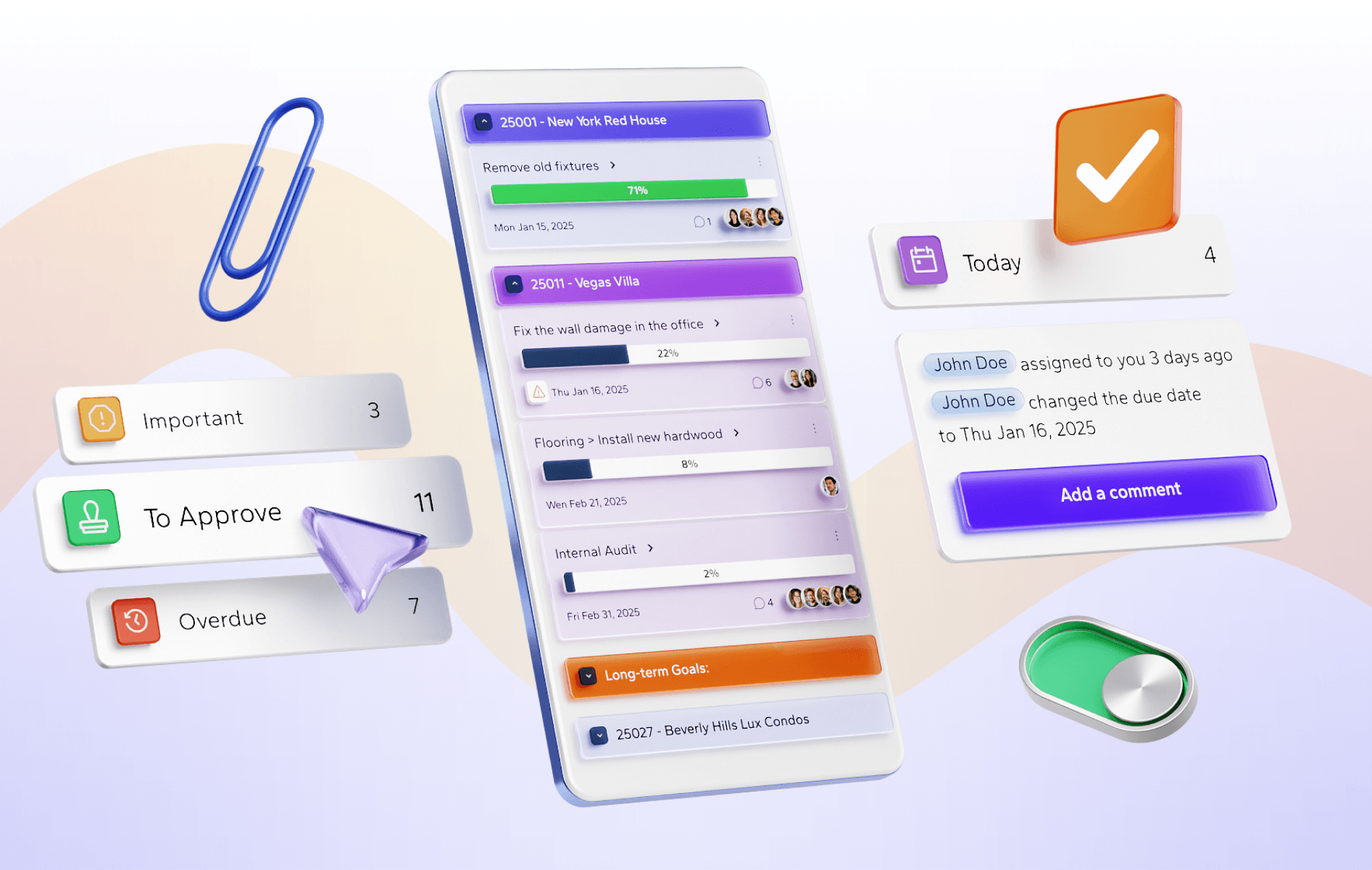
In Playbook a punch item carries the same structure as any other task: an assigned party, evidence attached, a confirmation that the responsible subcontractor will attend, and a link to the milestone it gates. Field teams can raise items with photos or a voice note from where they are standing, and the team can see which open items sit between the project and handover rather than reading a count.
What is a construction punch list?
A construction punch list is the record of incomplete, defective or non conforming work identified as a project approaches completion. Each item is assigned to the responsible subcontractor and must be closed before handover.
What is the difference between a punch list and a snag list?
They are the same document. Punch list is the North American term, snag list is used in the UK, Ireland and much of the Commonwealth.
Who creates the punch list?
Usually the general contractor, architect or owner's representative, often walking together. Subcontractors may also produce their own pre punch lists to catch defects before the formal inspection.
When should punch lists be started?
By area, as each zone or floor reaches completion, rather than waiting for the whole project. Rectifying a defect while the trade is still mobilised is far quicker and cheaper than bringing them back after demobilisation.
Note to editors:
High-resolution images and interviews with PYBK leadership team members are available upon request.

Project controls is the discipline of measuring whether a project is going to hit its time and cost targets, and providing early enough warning to do something...

There is no single best construction scheduling tool, and any list that names one is answering a different question from the one you are asking. What exists...

OAC stands for Owner, Architect, Contractor. An OAC meeting brings those three parties together on a regular cycle, usually weekly or fortnightly, to review...